

Built-ins That Pay You Back: How to Invest Without Regret
Built-ins aren’t “extra.” They’re what happens when a home needs to function beautifully.
When our Charlestown Condo Refresh client reached out, she wasn’t asking for a Pinterest-perfect makeover. She was asking for a solution and a plan.
She was outgrowing her small historic condo, but she wasn’t ready to move—and honestly, she didn’t want to. She had a low mortgage she’d worked hard to secure, and the idea of trading that for today’s market didn’t make sense. What she wanted was simple and very relatable: make her home work better now, so it felt calmer, more functional, and more “her,” without throwing money at random furniture fixes.
The living room was the main pressure point. Over time it had become a patchwork of piecemeal furniture—pieces that worked individually, but not together. The sectional was oversized, which made it difficult to comfortably face the TV. The fireplace wall felt like a constant compromise: an awkward TV-over-mantel setup, an architectural stair cutting into the right side of the wall, and no cohesive “system” for storage. And because the palette was drab and flat, the whole room read more “temporary” than “intentional.”
So our goal wasn’t “add built-ins.” The goal was to create a home she loved living in—one that felt finished and easy—by making a few smart changes that would improve everyday life immediately and hold value over time.
The problem with “one more furniture piece”
This is what happens in small homes all the time: you keep adding standalone pieces to solve specific problems (a console here, a shelf there), but the room still doesn’t feel cohesive. In this space, the console on the left of the fireplace was underscaled for the wall, the right side became an overflow zone for items that didn’t have a home, and the TV wall never felt like a true focal point.
In the “before,” you can literally feel the room working too hard:
The fireplace/TV has visual weight, but the surrounding wall doesn’t support it.
Storage is scattered, so clutter shows up where it shouldn’t.
The layout is fighting the furniture (instead of supporting real life).
When a room is tight, visual noise matters. If there isn’t a clear place for everyday things to go, the room will always feel smaller than it is—no matter how pretty the furniture is.
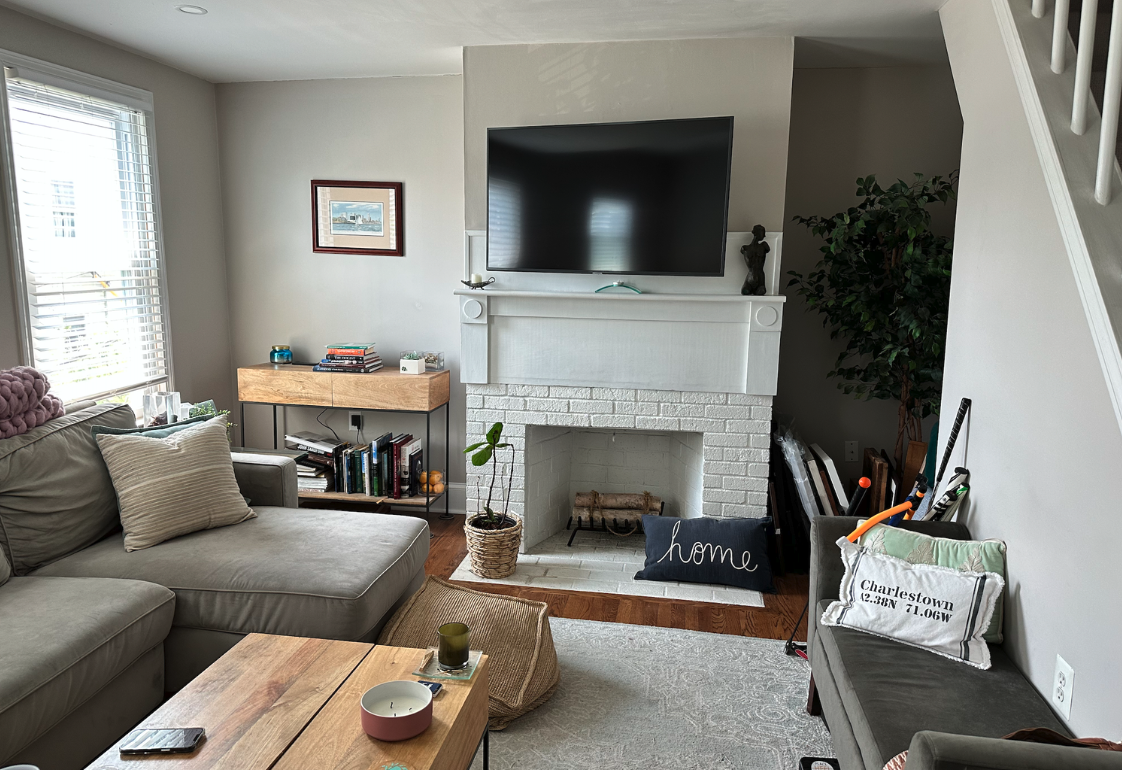
Before photo from our Charlestown Condo Refresh project
What we changed (life-first, not “perfect-house”)
1) We turned an awkward wall into a real anchor
Instead of treating the fireplace/TV as a standalone element, we gave it a designed “frame.” Built-ins create an intentional surround so the TV doesn’t feel like it’s floating, and the whole wall reads as one cohesive feature. We also demo-ed the old mantel and added elevated moulding tailored to the scale of the existing TV to emphasize historic charm of the neighborhood.
2) We brought balance to an asymmetrical situation
That stair line on the right side of the wall creates natural imbalance. The built-ins help “complete” the composition—so even with architectural quirks, the focal wall feels intentional and finished.
3) We added closed storage (the calm-maker)
Closed base cabinetry is the unsung hero in a living room. It’s what makes a space feel calm even when you’re actually living in it. Instead of the right side of the fireplace becoming a catch-all, the room now has a designated place for the unglamorous stuff.
4) We made room for personality without inviting clutter
Open shelving can go either way—it can look curated or chaotic. The difference is having enough closed storage elsewhere and styling with intention. In the “after,” the shelves become a place for art, books, and meaningful objects, without asking the room to hold everything out in the open.
5) We used color strategically to add depth
The deeper shelf backing instantly gives dimension and warmth. It adds contrast to the crisp white built-ins and makes the wall feel layered and custom—without making the space feel heavy.
The end result wasn’t just “more storage.” It was a living room that finally feels:
cohesive
easy to maintain
finished
personal
and far more functional for everyday life
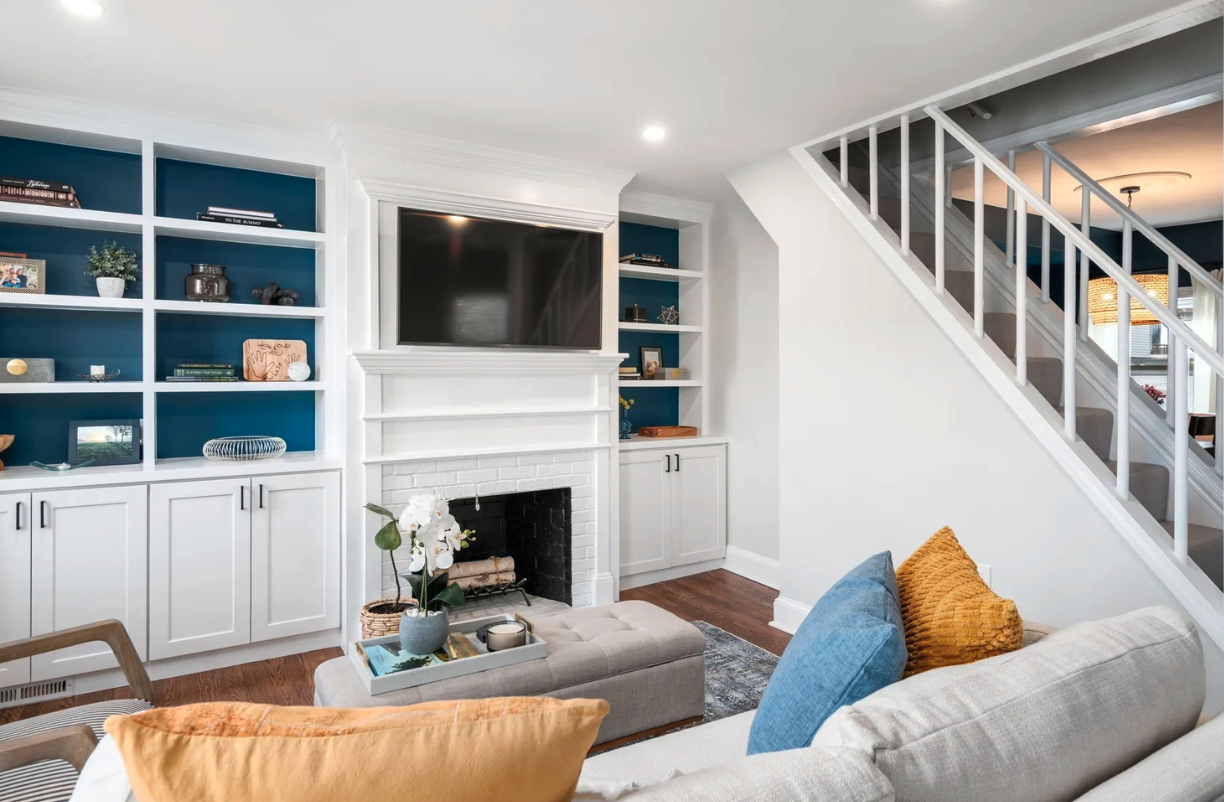
After photo from our Charlestown Condo Refresh project
So… are built-ins worth it?
Built-ins pay you back when they replace multiple problems at once—not when they’re treated like decoration.
Here’s the lens I use with clients who are deciding whether built-ins are a smart investment:
Built-ins are worth it when they:
Replace 2–3 furniture pieces that were doing fragmented jobs
Create a true “home” for everyday clutter (so the room stays calm)
Improve flow and make the room easier to use
Help a space feel finished in a way that furniture alone often can’t
Support how you live now, without locking you into one overly-specific setup
And the biggest “no regret” rule:
If your built-ins only work for today, they’ll feel wrong tomorrow.
The best built-ins include flexibility—adjustable shelves, a mix of open and closed storage, and at least one “flex zone” that can change as life changes.
The 4 fears (and what actually causes regret)
“It’ll feel smaller” → happens when depth/proportion isn’t planned
“What if I regret it?” → happens when there’s no flex zone
“I don’t know what I need” → happens when storage isn’t category-based
“Is it worth it?” → worth it when it replaces 3+ problems
What makes built-ins ‘worth it’ (ADDG rules to live by)
Start with categories, not vibes
Use a closed/open ratio (often 70/30 to start, then adjust for lifestyle)
Plan power/cord paths early
Design one flex bay that can adapt as life evolves
Make it look intentional with repetition + negative space
Real-world built-ins that deliver ROI:
Mantle built-ins: symmetry + storage + focal point
TV/media: hides tech + consolidates furniture + calmer room
Desk built-in: productivity zone + concealed supplies + visual order
Beverage station: entertaining ritual + storage + “destination” moment at home
Up next we will be sharing new concept designs for a home with multiple built-ins projets on the horizon, be sure to follow along on our instagram. You can also download our built-ins planning checklist below and scroll to see a few more of our before and after built-ins for past projects.
Want our built-ins planning checklist?
If you’re considering a media wall, mantle built-ins, a desk zone, or a beverage station, I put together the exact planning checklist I use to prevent expensive regret. (And yes—when you grab it, you’ll also be subscribed to Design Notes, my quarterly newsletter: thoughtful, seasonal, never overwhelming.)
Scroll below for additional inspiration from some of our favorite past built-in designs.
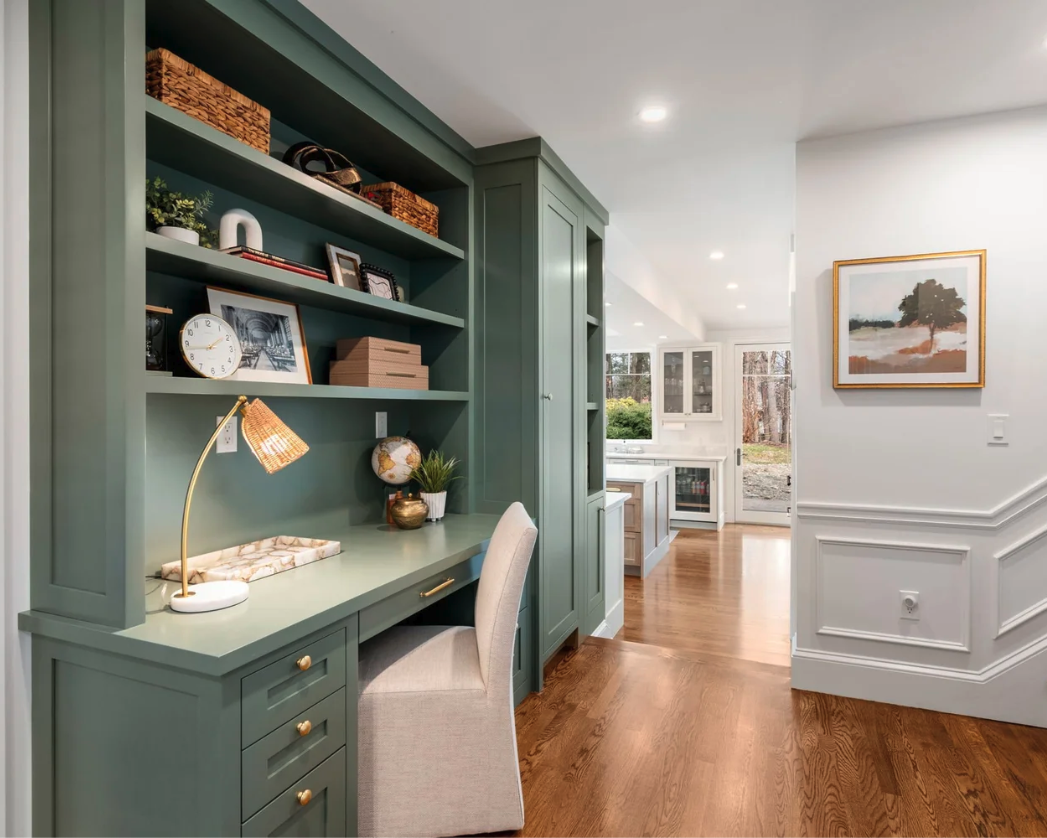
Built-in office nook off the kitchen: A work-and-storage hybrid—open shelves up top, deep drawers below, a tall closed cabinet for overflow pantry needs, and open end shelving for cookbooks right near the prep zone. Image from our Weston Colonial Reno project.
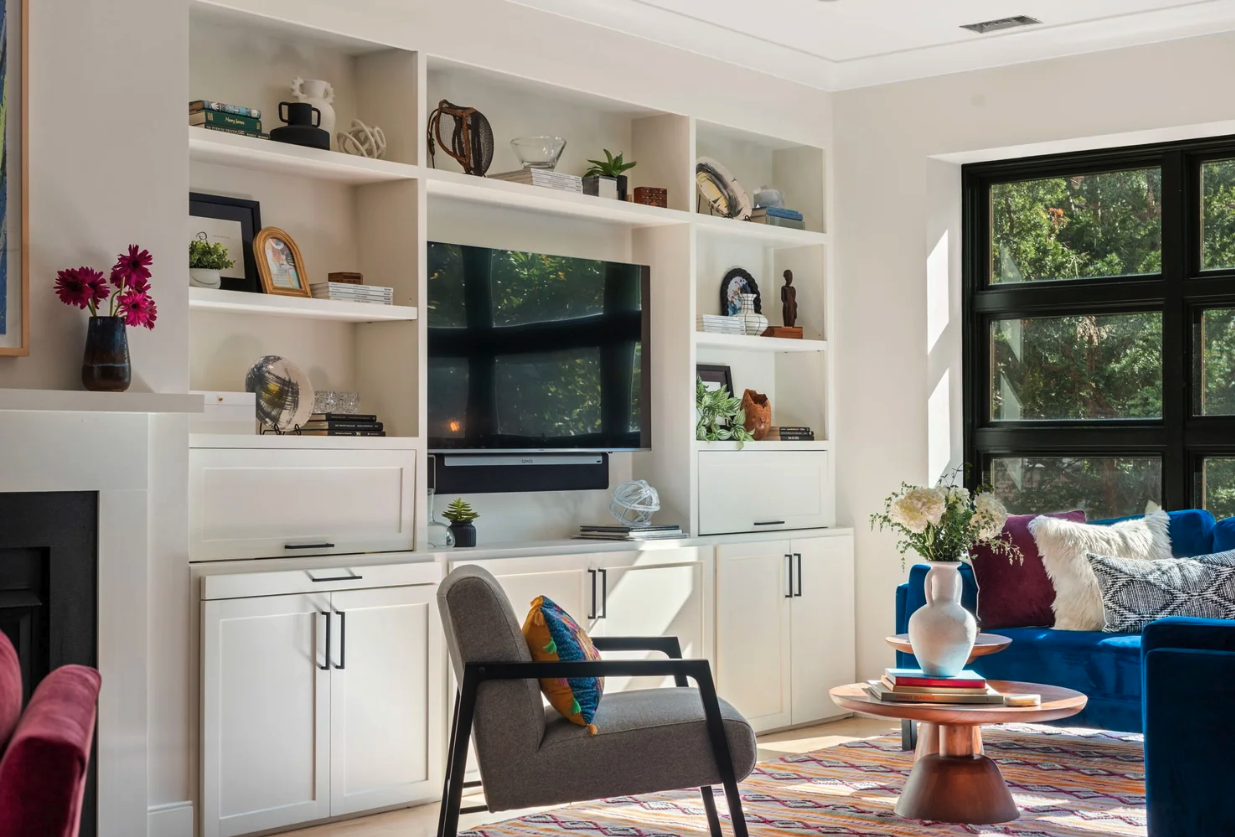
TV/media wall built-in: A clean white storage wall with a hidden WFH bonus—can you spot the pop-up desk? The lift-top cabinet on the left pairs with a pullout keyboard tray below, creating an “office when you need it” nook that disappears when you don’t. Color comes in through the textiles, upholstery, and styled shelves for the joy-filled feel this family wanted. Image from our South End Family Refresh project.